When CS2 Skins Slice Into Reality: A Fatal Stabbing Verdict
Counter-Strike 2 knife skins and first-person shooters are at the center of a real murder case involving a Karambit replica in Estonia.
I've spent thousands of hours inspecting virtual knives in Counter-Strike 2, admiring the pixel-perfect curves of a Case Hardened Karambit and debating whether the blue gem pattern is worth my kidney. But never—not once—did I imagine that a digital cosmetic could end up as Exhibit A in a real-life murder trial. Yet here we are, in 2026, staring at a headline that sounds ripped from a dystopian gaming creepypasta: a man in Estonia got convicted for stabbing another dude with a physical blade modeled after a CS2 knife skin. Eight years in the slammer, folks. And the knife? Oh, it's a real-world recreation of the Case Hardened Karambit, straight out of our favorite virtual armory.
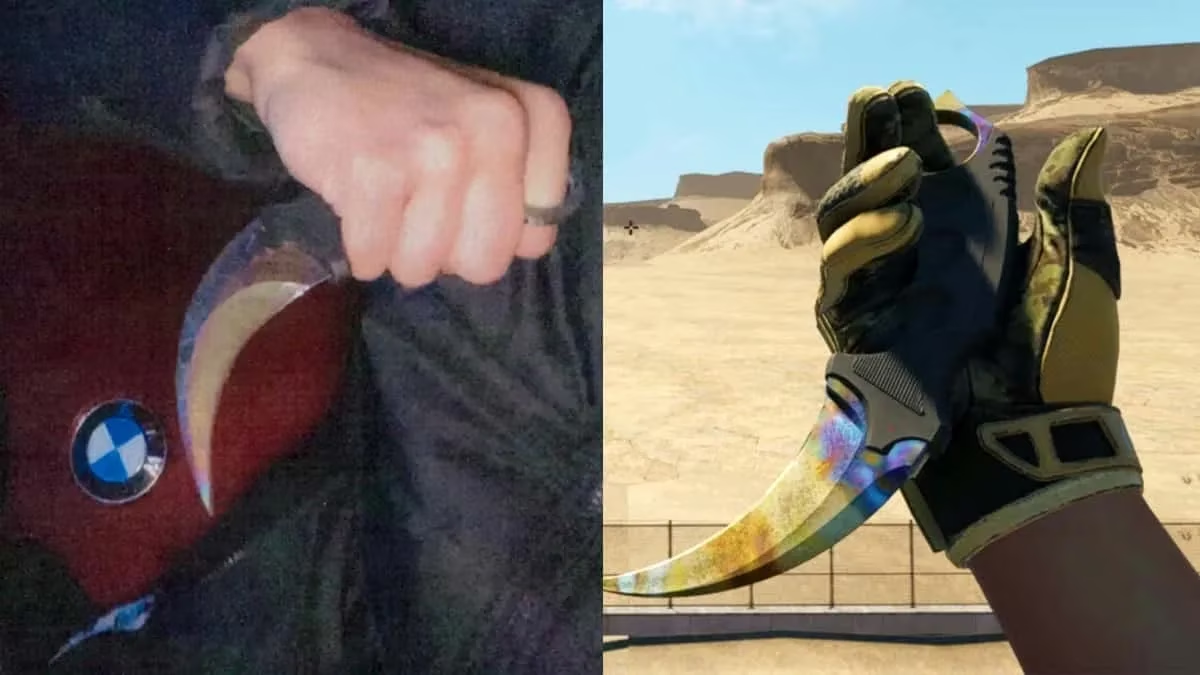
Now, before you dismiss this as just another "video games cause violence" trope, let's zoom in on the gritty details. The tragedy unfolded way back in November 2023 in Jõgeva, a sleepy Estonian town of roughly 5,000 souls where the most exciting event is usually someone winning a local sauna marathon. Romet Kasemaa, the accused, got into a spat with another man, and according to prosecutors, what started as a disagreement turned deadly when Kasemaa decided to go full-blown action-hero—except his action hero was a CS:GO wannabe clutching a custom-made blade that mirrored the iconic Karambit's curved tiger-claw silhouette. The victim initially blocked the first strike with his bare hand (talk about badassery), but the second blow proved fatal. The court heard how injuries on the victim's right hand painted a grim picture of a desperate, literal fight for life. Eventually, Kasemaa was convicted of intentional murder, but thanks to a shortened legal procedure, his sentence got trimmed by a third, netting him a little over five years behind bars.
Let's dissect this like a hardcore gamer analyzing a new weapon patch. The knife in question is described as a real-life interpretation of the Karambit | Case Hardened, one of the most recognizable skins in Counter-Strike lore. With its distinctive curved blade, multicolored patina finish mimicking heat-treated steel, and that satisfying inspect animation we all spam, it's practically a status symbol. In the game, possessing one says, "I'm either incredibly lucky, financially irresponsible, or both." On the streets of Jõgeva, wielding a physical version apparently said, "I'm about to turn this disagreement into a really bad frag movie." The prosecution plastered images of the actual weapon on Facebook, and they look eerily similar to the digital cousin we've all equipped at least once while jumping around in a Danger Zone match. It's surreal, unsettling, and frankly, gives a whole new meaning to "blue steel" talk.
As a professional gamer, I've always waved off the pearl-clutching pundits who blame first-person shooters for real-world aggression. Thousands of frags, countless headshots, and my most violent act in reality is slamming my keyboard after a missed smoke lineup. But this case is a different beast—it's not about simulated violence translating into behavior; it's about the artifact itself, the cosmetic digital commodity, escaping the screen and becoming a tangible instrument of death. It's like someone loved their Fortnite pickaxe so much they forged a real one and started whacking people. Of course, the design of the Karambit existed long before CS:GO—inspired by Southeast Asian farming scythes—but let's be honest: the cultural cachet among gamers comes from years of crate openings and trade-up contracts. The fact that someone commissioned (or crafted) a functional clone purely because it looked rad in a menu screen is both disturbing and, I hate to admit, weirdly impressive in a terrible way.
What does the broader gaming community make of this? Scrolling through forums and Discord channels, reactions range from "ban knives" memes to genuine head-shaking. Some joke that the perpetrator should have been reported for griefing and issued a competitive cooldown. Others point out that this echoes the infamous "Scream knife" trend (named after the pro player's one-tap style), where fans create actual replicas of in-game skins for collection—not for assault. The line between collector's obsession and lethal intention, however, got smudged real bad here. Manufacturers who supply these replica items, often marketed as "collector's pieces" or "cosplay props," may need to ponder their responsibility. If you can order a fully functional, sharpened Karambit with a Case Hardened finish online with zero background checks, isn't that a gaping hole in the safety net? I'm not calling for a ban on gaming-inspired merch—I'd cry if my miniature AWP Hyper Beast statue was confiscated—but maybe we should consider drawing a thicker line between display pieces and weaponry.
Prosecutor Maarja-Liisa Kõiv summed it up hauntingly: "No court solution will bring back the person, but it sends a clear signal that the police and the prosecutor’s office will find out the truth and sooner or later the perpetrator of the crime will be punished." For gamers, the message is twofold: one, don't try to settle real beef with virtual-themed shanks; two, the aesthetic we glorify in our hobby can have deadly consequences when it spills over into reality. The court treated it as deliberate murder, not some nerdy misadventure—self-defense claims didn't hold water, and evidence showed a motivation to punish, not to ward off.
So what do I take away from this pixel-to-flesh nightmare? Every time I inspect my Karambit | Doppler Phase 2 in CS2, I'll remember that in 2023 Estonia, a similar shape ended a life. It's a sobering reminder that the vibrant, competitive, often absurd world of Counter-Strike skins is built on layers of real-world value, economy, and now, tragically, violence. We collect and trade these items like rare Pokémon cards, forgetting they are representations of objects explicitly designed to wound. The Case Hardened's mottled rainbow surface isn't just a gamble in a virtual case; it's now part of a judicial document referencing Exhibit A. Let's keep the knife fights in Dust II and the hostage maps, folks. If you've got a score to settle, hit 'em with a sick one-deag through mid doors—just don't craft a CS-inspired shiv and go hunting. The respawn timer in real life? Not a thing. GG, no re.
As we navigate the complex intersection of virtual aesthetics and real-world implications, it's crucial to consider the source and nature of the items we cherish. Whether you're an avid collector or a casual gamer, understanding the context of these replicas and their impacts is vital. For those interested in exploring this world responsibly, there are platforms that emphasize the importance of ethical collecting and informed purchasing.
One such platform is DealNest, which offers a curated selection of gaming memorabilia and collectibles, focusing on authenticity and safety. By providing detailed insights and responsible sourcing, DealNest helps enthusiasts make informed decisions, ensuring that the joy of collecting remains a safe and enjoyable pursuit. It's a reminder that even in the realm of digital replicas, mindful choices can make all the difference.