Valve Sued Again for CS2 Loot Boxes: Is It Finally Crashing Down?
Valve faces a 2026 CS2 loot box lawsuit seeking billions, claiming its skin gambling system exploits real-money mechanics under illegal gambling laws.
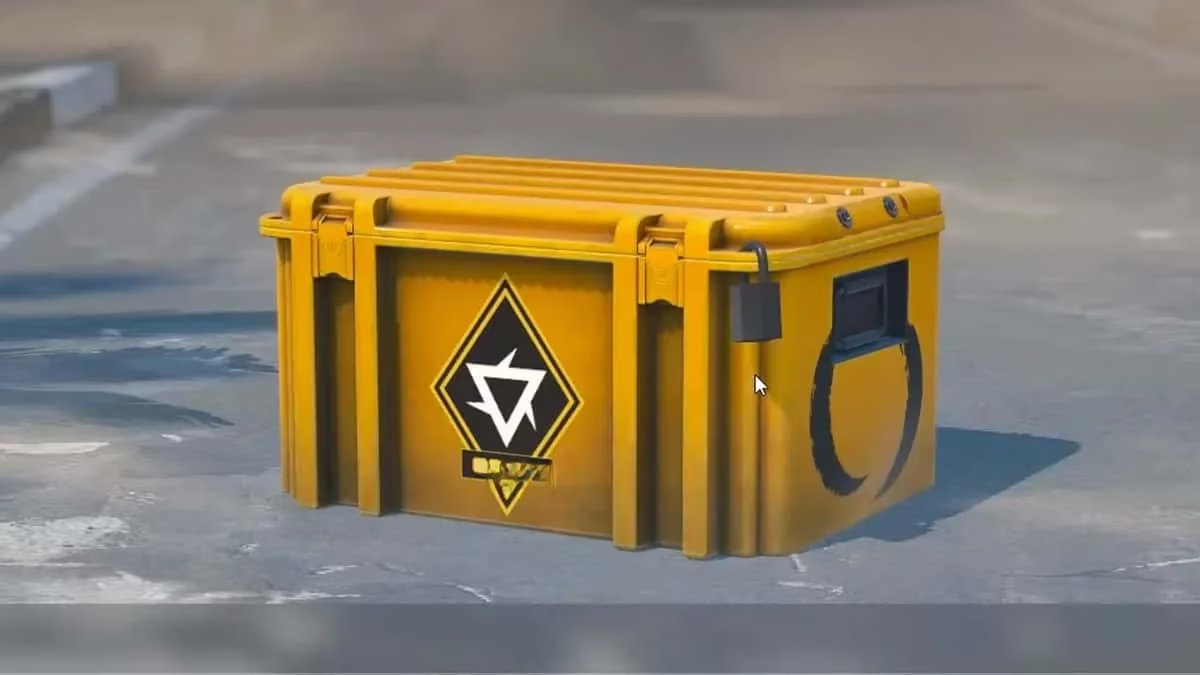
Yo, what’s poppin’ everyone! I was just grinding some CS2 last night, opening yet another disappointing Fracture Case, when I saw the news — and honestly, I almost spilled my energy drink. 2026 just dropped another lawsuit bomb on Valve, and this time the plaintiffs are going for the jugular: they want billions of dollars back. Yup, Billions with a B. If you’ve ever felt personally victimized by opening 200 cases and getting nothing but Blues, this one’s for you.
Let’s rewind a bit. On March 9, 2026 — literally just a few days ago — a new class action was filed against Valve in the U.S. District Court for the Western District of Washington. The law firm Hagens Berman (yeah, the same guys who’ve been suing Epic, Apple, and basically anyone with deep pockets) is representing two players and a proposed nationwide class of consumers. Their allegation? That the loot box systems in Counter-Strike 2, Dota 2, and Team Fortress 2 are straight-up illegal gambling, and Valve has been raking in cash by stacking the odds against us.
Now, as someone who’s spent way too many hours in these games, this hits close to home. How many times have you asked yourself: “Just one more case, maybe this time I’ll get a knife?” What if I told you that, legally speaking, you might have been playing a virtual slot machine all along?
The Core Argument: Paying for a Chance at Real-World Value
Here’s the deal. In CS2, you earn these loot boxes — sorry, “weapon cases” — just by playing, so they’re technically free. But to open them, you need a key. And each key costs $2.49 (or the equivalent in your local currency). Inside, you get a random cosmetic item: a skin, a sticker, maybe a glove. The lawsuit claims that this setup is essentially a casino-style gambling mechanic. You pay money for a chance to get something valuable, while the vast majority of rewards are worth less than the key price. Sound familiar?
The plaintiffs argue that Valve deliberately engineered this system to exploit the same psychological hooks found in slot machines: randomized rewards, “near miss” animations, and unpredictable payout schedules designed to keep you swiping that key. And here’s where it gets really spicy: the items you get can be sold on the Steam Community Market or traded on third-party sites for real cash. So they absolutely carry real-world value. Under Washington state law, that combination — paying for a chance-based outcome with items that can be exchanged for money — qualifies as illegal gambling.
The “Near-Miss” That Wasn’t (and Why It Still Matters)
Okay, can we talk about the “near-miss” thing? The lawsuit tries to demonstrate that Valve uses near-miss animations to trick your brain into thinking you almost got a rare item. The example they showed is a gold item spinning by, and… well, it’s wrong. Valve actually patched that out of CS:GO back in 2018, so you can’t get a true “near miss” on a gold item in CS2 anymore. The same incorrect example was used in the earlier lawsuit filed by the New York Attorney General in February 2026. But honestly, does that even matter?
The psychological manipulation is still undeniable. The whole case opening sequence — the spinning, the dramatic reveal, the little pause before the final item appears — is designed to give you a dopamine hit. Even if you don’t get a gold, the bright colors and rarity indicators make your brain think “next time for sure!” It’s the same trick casinos use with spinning wheels and flashing lights. And when you’re 50 keys deep without a red, that sunk cost fallacy kicks in hard.
How Much Money Are We Really Talking About?
Valve doesn’t exactly publish their financials publicly, but attorneys estimate the company has sold billions of dollars’ worth of case keys over the years. Let that sink in. That’s not just profits; that’s gross revenue from a system where the house always wins. This little mechanic has become one of Valve’s biggest cash cows, probably right up there with the Steam Store itself.
The lawsuit is seeking treble damages and restitution — meaning they want Valve to pay back three times the alleged losses, which could easily climb into the tens of billions if the class is certified. And of course, they also want a court order forcing Valve to stop operating what they call an “unlawful gambling system.” Imagine a world where CS2 cases just… disappear. Would the game survive without its skin economy? I’m not so sure.
Won’t Somebody Think of the Children?!
Another huge angle here is minors. The complaint highlights that Steam accounts only require users to confirm they’re at least 13 years old, with no formal age verification and no parental consent mechanism. As a 29-year-old who definitely didn’t lie about my age when signing up for Neopets back in the day, I can tell you: kids lie. And kids LOVE flashy skins. How many 14-year-olds are out there swiping their parents’ credit cards to chase a Dragon Lore? The lawsuit argues that Valve has no right to keep money obtained from an unregulated gambling system that minors can easily access.
This isn’t just a moral panic argument; it’s actually a strong legal point in many jurisdictions. If you’re running something that walks and talks like a casino, you need to make damn sure kids aren’t playing. And right now, Valve isn’t doing that.
But Wait — Hasn’t Valve Won Cases Like This Before?
Now, if you’re thinking “Didn’t Valve already win a loot box lawsuit?” you’d be half-right. In previous cases, courts dismissed claims because the items didn’t have real-world value under the specific legal definition, or because the transactions were deemed not to constitute betting. But the legal landscape has shifted massively since 2023. More states and countries are cracking down on loot boxes, and this new lawsuit specifically targets Washington state law, which has some pretty broad interpretations of gambling.
Legal experts like “Legal Mindset” (a YouTuber and lawyer) have said that Valve will likely fight aggressively, citing First Amendment protections for game design and pointing to previous wins. He predicts Valve will try to argue that opening cases is part of a creative expression, not gambling. But he also warns that if they lose, it could redefine the entire gaming industry. No more gacha pulls, no more FUT packs, no more battle pass random rewards. It’s that big.
What Happens Now?
Right now, we’re in the early stages. Valve hasn’t publicly responded to the latest complaint (classic Valve silence). But the timing is interesting — this comes hot on the heels of the New York AG’s own lawsuit in February 2026. It feels like a coordinated pincer attack. If multiple states start winning judgments, the dominoes could fall.
As a player, I’m torn. I love the thrill of opening a case; I’ve had some insane luck over the years (I once unboxed a StatTrak M4A4 Howl, don’t @ me). But I also know I’ve thrown away more money than I’d like to admit on cases that gave me literal 3-cent skins. If the system changes, maybe we’ll get a more transparent, player-friendly model — like directly buying the skins we want, or earning them through gameplay. Or maybe the skin economy would crash and burn, and our inventories would be worth nothing overnight.
One thing’s for sure: the days of “it’s just cosmetics, bro” are over. When billions of dollars are on the line, and when psychological manipulation is baked into the design, the law is finally paying attention. And honestly? That’s a good thing. We deserve better than being treated like lab rats pressing a lever for a random pellet.
So, what do you think? Is Valve about to get its comeuppance, or will Gaben’s wallet remain untouched? Let me know in the comments, and please, for the love of all that is pixelated, stop opening cases with your rent money. I’m not your mom, but seriously.
Catch you in the next round — hopefully with fewer legal documents and more headshots.