Valorant's Console Gamble: How Riot Made PC Precision Work on a Controller
Valorant's console edition delivers lethal precision via Focus mode, offering separate sensitivities for controller players.
In 2026, tactical shooters are a dime a dozen, but Valorant's console edition remains a fascinating case study in stubborn precision. Riot Games did not simply dump its PC darling onto PlayStation and Xbox and hope for the best. That would be like teaching a cat to fetch: technically possible, emotionally confusing, and likely to end with someone bleeding. Instead, Riot treated the console port like a high-stakes operation, because Valorant is not Fortnite. It is a game where one bullet ruins your day, your round, and your team's entire plan. The mission: make a controller feel as deadly as a mouse, without turning the game into a clumsy mess.
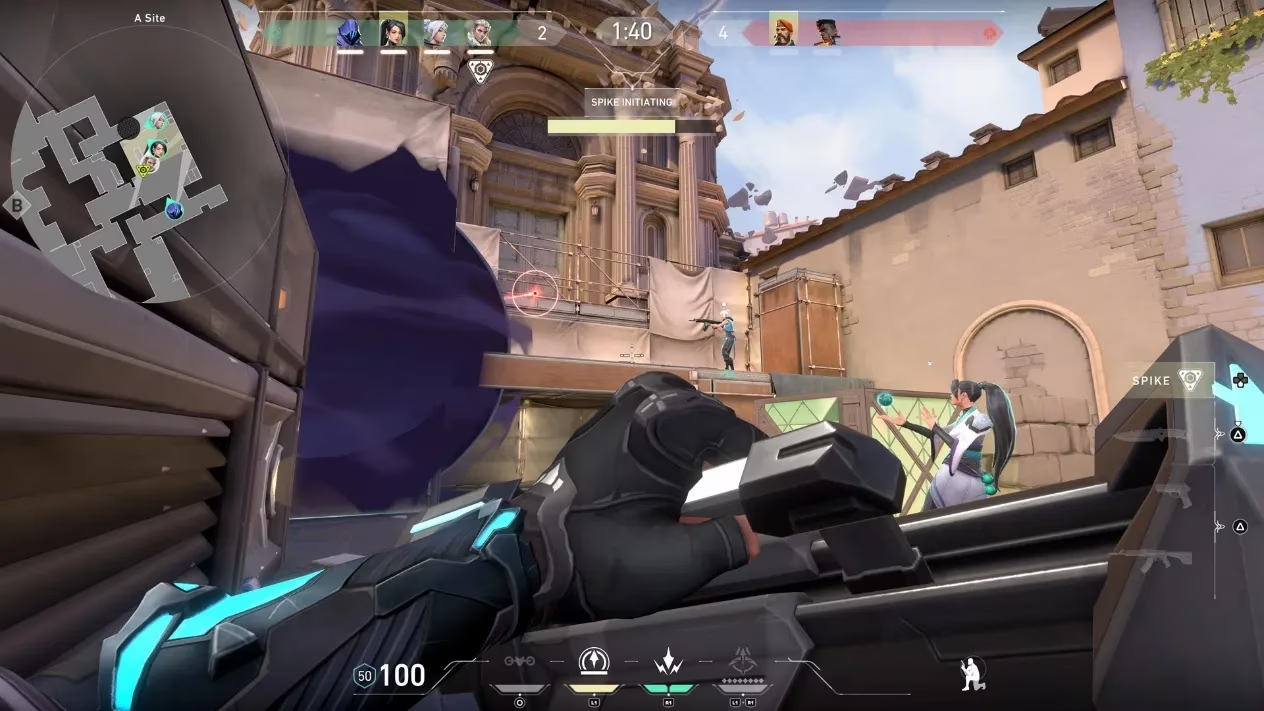
The core problem was simple to state and brutal to solve. On PC, a mouse lets players whip around for a 50/50 angle check and then snap to a pixel-perfect headshot on a moving target. On a controller, those same demands can feel like trying to thread a needle while riding a unicycle. Many shooters solve this with aim assist that feels like a magnet wrapped in bubble wrap. Riot wanted something better. Production director Arnar Gylfason explained that there were moments when the team wondered if the whole project was even possible. If they could not solve the control problem, they would have had to say the game simply could not come to console. That is how high the stakes were.
Riot's answer was Focus mode, a clever half-step between firing from the hip and aiming down sights. On default settings, pulling the left trigger slips the player into Focus mode, which tightens the view slightly and switches to a more precise aiming sensitivity. The beauty is that players can set separate sensitivities for looking around, Focus mode, and ADS. This lets them whip around quickly to check angles, then dial in for a clutch headshot without fighting the controller. In practice, it works surprisingly well. It tightens the view without completely destroying situational awareness, and it gives console players a fighting chance in a game where one or two shots almost always decide a duel.
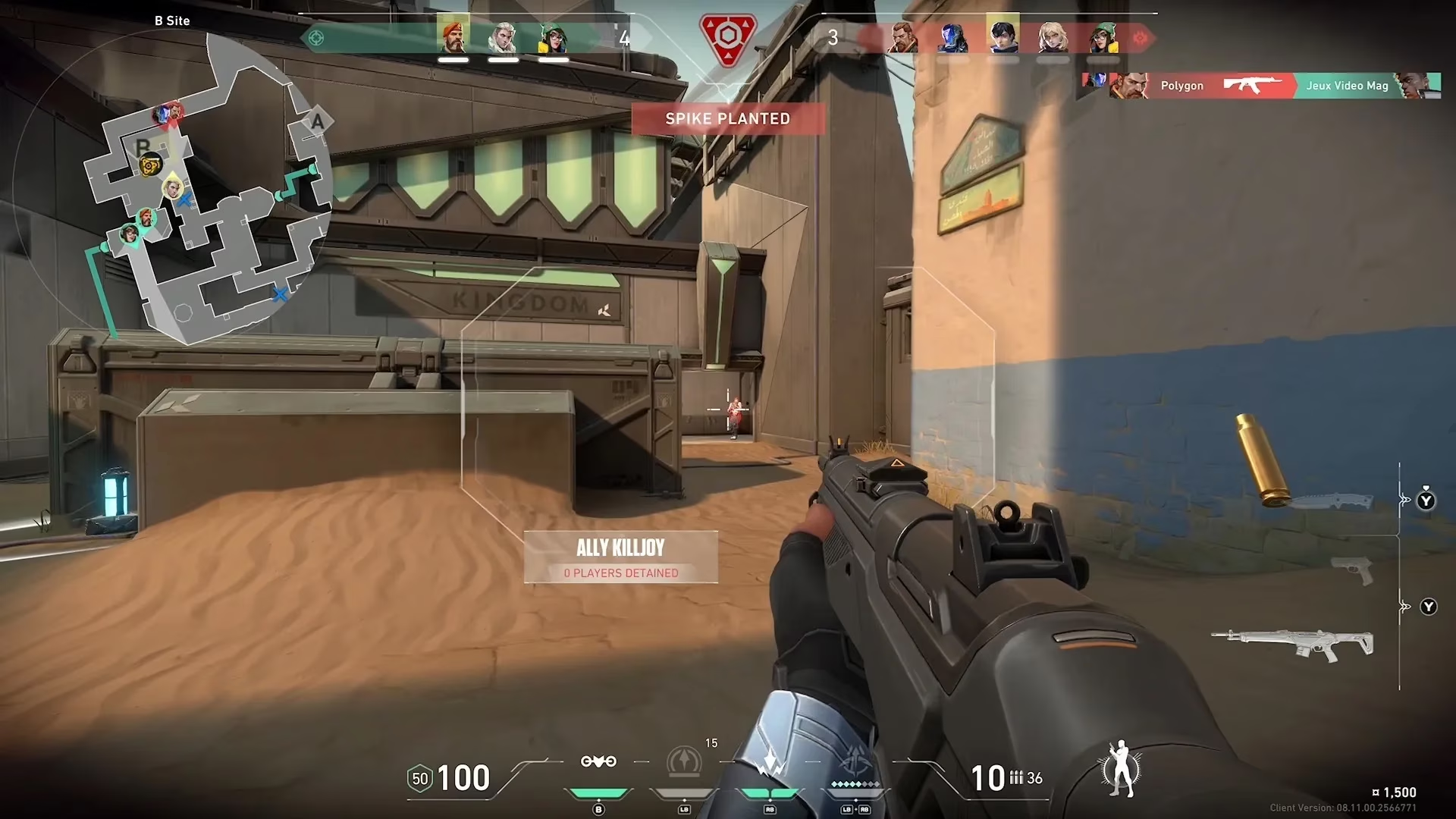
But Focus mode was only part of the battle. Riot could not just port Valorant one-to-one and call it a day. Small differences in controls create subtle ripples throughout the entire experience. Gylfason pointed to incoming abilities like Reyna's Leer, Sova's dart, or Gekko's creatures. These abilities force a player to make a split-second choice: deal with the ability, hide, or tank it and take the fight. The key is the disruption time, not the exact number of bullets required to destroy the ability. On console, it might take a different number of shots to clear a Reyna Leer, but the time lost looking away from an angle and then turning back must feel roughly the same. That is the kind of invisible tuning that keeps the game's soul intact while changing its skeleton.
| Challenge | PC Reality | Console Solution |
|---|---|---|
| Fast 180s and pixel headshots | Mouse allows both | Focus mode with separate sensitivities |
| Ability disruption | Look away, shoot, look back | Tuned so distraction time matches, not bullet count |
| Input fairness | Mouse and keyboard advantage | No cross-play, anti-cheat blocks M&K in console lobbies |
| Performance | Powerful PCs | Stable 120 FPS target on all consoles |
| Progression | Account investment | Cross-progression, same servers, same netcode |
Riot also drew a hard line in the sand: no cross-play between PC and console. Xbox Series X|S and PlayStation 5 players share lobbies, but they never go up against PC players. The anti-cheat software keeps mouse and keyboard players out of console matches, so a controller player knows the playing field is level. Stats are separated by platform, too. That means a player can dominate on PS5 without worrying that a few clumsy PC matches will tank their precious kill/death ratio. It is a small mercy, but a mercy nonetheless.
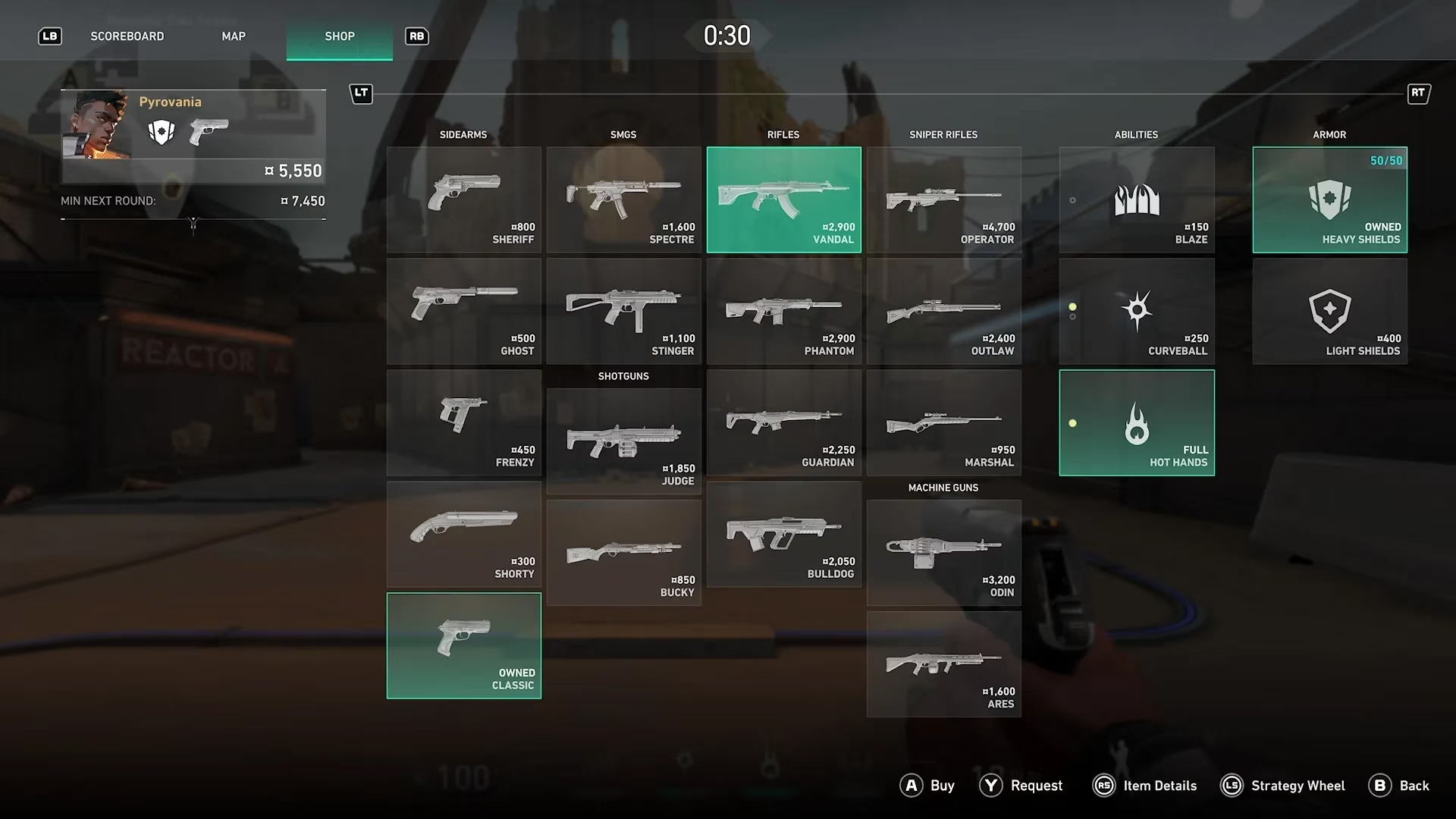
Cross-progression, however, is fully embraced. Valorant remains free-to-play, and a player's account is shared across platforms. Skins, cosmetics, and purchases follow the player like a loyal, slightly threatening puppy. Gylfason said it was important to honor player investment, whether that investment is time or money. Console players also log into the same infrastructure, the same netcode, and the same servers as PC players. They are not passing through some weird console limbo. They are mainlined into Riot's infrastructure from day one.
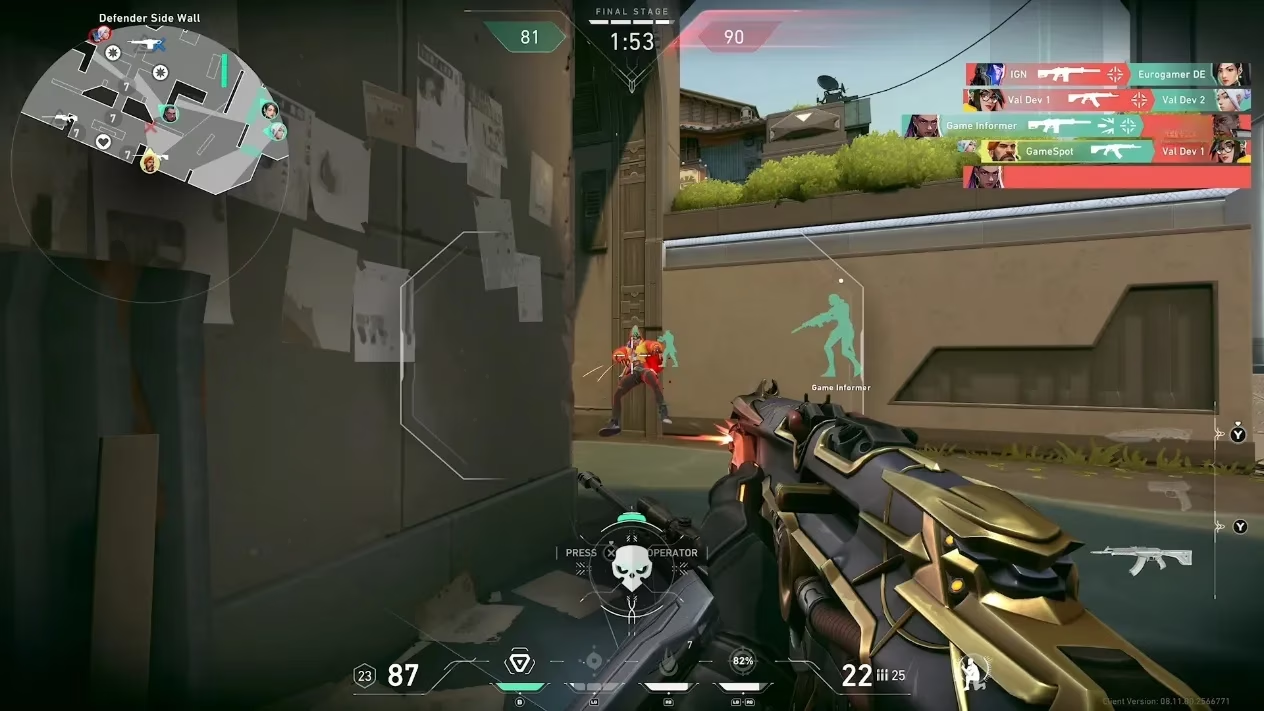
The limited beta kicked off on June 14, 2024, in the US, Canada, Europe, the UK, and Japan. By 2026, the conversation has shifted from whether console Valorant can work to how well it has aged. The lessons remain sharp. Adapting a hardcore PC shooter to console is not about dumbing it down. It is about preserving the competitive soul while rebuilding the control scheme from the ground up. Focus mode, distraction-time tuning, 120 FPS targets, and strict input-based matchmaking are all part of that philosophy.
So the next time a controller player flicks around and one-taps an opponent before they can even blink, do not blame aim assist. Blame Riot's obsessive quest to make two completely different input methods feel like the same brutal game. And maybe blame yourself for peeking the same angle twice. 🎯