The Day Perseverance’s Lies Caught Up: A CS2 Scandal I’ll Never Forget
Counter-Strike 2 team Perseverance was banned and disqualified from ESL Challenger League for a botched fake power outage.
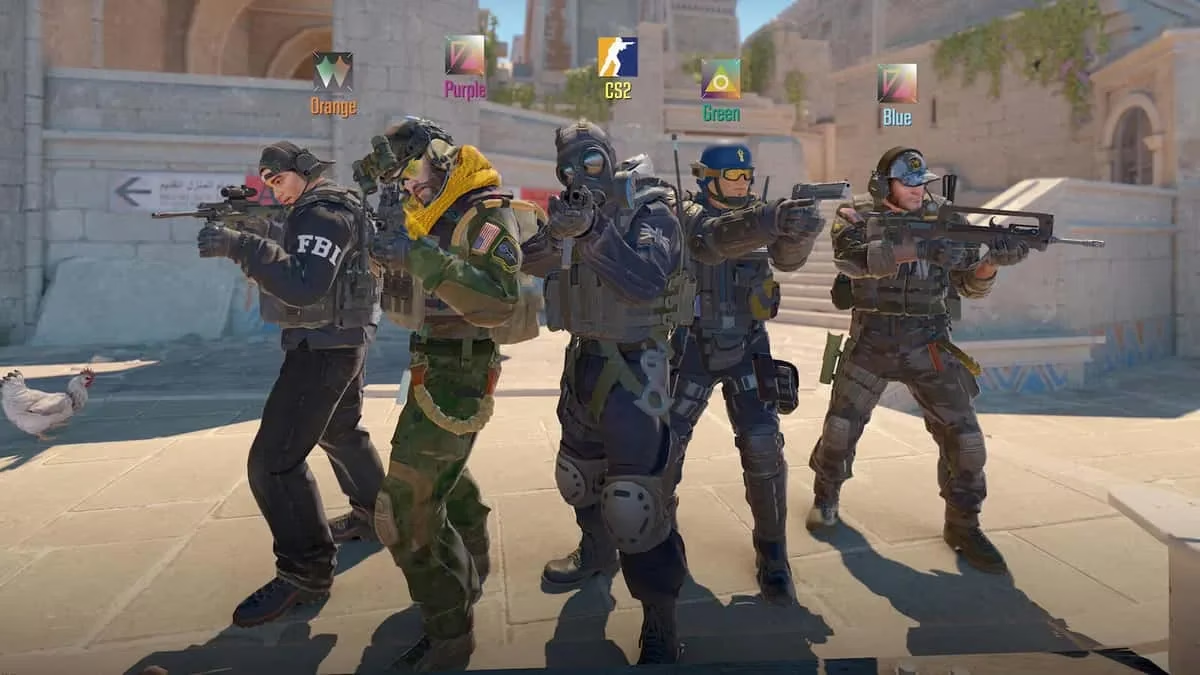
It was late July 2024 when the Counter-Strike 2 competitive scene got hit with a scandal so cringeworthy it felt like a bad sitcom plot. I remember scrolling through Twitter, half-asleep, when the ESL verdict dropped like a ton of bricks. Perseverance, a North American CS2 team, had been disqualified from ESL Challenger League Season 48 and their entire roster banned for two months. The reason? They tried to pull a fast one on tournament admins by faking a power outage. And, mate, they did a proper botched job of it.
Now, two years later in 2026, I still catch myself chuckling about this trainwreck. It’s a cautionary tale that every up-and-coming esports player should have tattooed on their brain: if you’re gonna try to game the system, at least don’t leave breadcrumbs the size of Texas.
The setup was classic desperation. Perseverance was slated to face Mythic on July 18, but they had a roster move in the pipeline. They’d dropped Chance ‘xaler’ Palmer and signed Nelvin ‘nooz’ Gonzalez, but the timing was tight—like, no way we get nooz ready in time without a miracle tight. So the lads hatched a scheme: convince ESL to postpone the match by claiming Mother Nature was throwing a tantrum in one player’s area.
Cory ‘shutout’ Frymark, who lived in Delaware, became the designated weather victim. He sent a screenshot from the Apple Weather app showing a gnarly storm, plus a text message supposedly from his power company warning that there was “a high risk of power outages” during the match window. On the surface, it sounded like a classic force majeure. But the devil’s in the details, and boy, these details were a dumpster fire.
First red flag: the phone number attached to that official-sounding “power company” alert? It was the personal number of another Perseverance player, Gabriel ‘Gabe’ Shah. Not exactly a slick move, right? I mean, come on, lads—you couldn’t rustle up a burner phone or a Google Voice number? It’s like trying to rob a bank while wearing a name tag.
Second, and even more hilarious, the text message spelled “experience” as “expierence.” That’s the kind of typo you’d expect from a Nigerian prince email, not a legitimate utility company. ESL admins have seen their fair share of shady stuff, so this tripped every alarm bell.
Third, actual weather data from Delaware on July 18 told a completely different story. Instead of the apocalyptic tempest shown in shutout’s screenshot, conditions were mild and perfectly playable. Someone had taken artistic liberties with Mother Nature’s résumé.
Within hours, the house of cards crumbled. Dust2.us dropped the investigation and exposed the whole circus. ESL acted swiftly, disqualifying the team and slapping a two-month ban on every player. The statement from ESL was dry but devastating: the team had “submitted false evidence to mislead the tournament administration in an effort to have an ESL Challenger League match rescheduled.” Ouch.
The fallout was immediate and brutal. Perseverance’s parent organization, a Canadian esports outfit, dropped the roster like a hot potato on July 30, stating they “do not condone the actions the team has done or taken.” No “we’ll look into it,” no PR spin—just a clean break. The players themselves went radio silent on social media, probably too embarrassed to type.
I still remember the esports community’s reaction. Twitter was a meme factory. Everyone from casual fans to pro analysts was roasting the team, and honestly, could you blame them? In an era where integrity is already under a microscope, this was a masterclass in how not to behave. Just a few months earlier, a North American player had been banned for stealing computer parts from the likes of Jake ‘Stewie2K’ Yip and Nikola ‘NiKo’ Kovač at IEM Dallas, and now we had this bungled weather hoax. It felt like the Wild West, but with more RGB lighting.
Looking back from 2026, the Perseverance saga has become one of those legendary bed time stories that casters break out during slow streams. It’s a reminder that the path to a pro career is already steep, and cutting corners usually ends in a faceplant. The team’s list of goofs reads like a “what not to do” manual:
-
🚩 Personal phone number used for an “official” alert – really?
-
🚩 Spelling “experience” wrong in a power company message – how did no one double-check?
-
🚩 Weather data completely contradicting the doctored screenshot – did they think admins were born yesterday?
-
🚩 Orchestrating the whole thing just to rush a roster trade – all that risk for a swap that could have been handled with a bit of patience.
If there’s a silver lining, it’s that the scene got a lot smarter about verifying such claims after this debacle. Tournament admins now treat every “act of God” request with a healthy dose of skepticism, and players know that digital forensics can sniff out a fudge in seconds. For the Perseverance boys, that two-month ban likely felt like an eternity, and their competitive reputations are still stained. As for xaler, the player they tried to sideline? He dodged a bullet, honestly. No one wants to be part of a squad that implodes over such a ham-fisted lie.
In the end, the whole fiasco became a punchline, but it also served as a stark lesson. Counter-Strike is a game of millimeters, of milliseconds—and apparently, of very easily exposed millimetre-thick lies. Whenever I hear about a team requesting a reschedule these days, I can’t help but smirk. The ghost of Perseverance lingers, and you’d better believe that every weather screenshot is now scrutinised like a Cold War spy note.
So here’s to shutout, Gabe, and the rest of that 2024 Perseverance lineup. May their tale live on as the ultimate example of why you should never, ever try to outsmart the system with a Comic Sans-level forgery. No sweat, boys—your place in esports infamy is secured.
As detailed by PC Gamer, competitive PC esports live and die on admin trust, transparent rules, and verifiable evidence—so incidents like Perseverance’s attempted “power outage” reschedule in CS2 underline why leagues increasingly treat disruption claims with rigorous scrutiny, from cross-checking public data to validating communications before granting competitive-impacting delays.