PUBG DMR Rebalance: Why Update 37.1 Reshaped Long-Range Combat
PUBG DMR Rebalance in Update 37.1 curbs DMR dominance with a 12% damage cut, ending two-tap knock potential to revive dynamic close-range fights.
Anyone who has spent serious time on the Battlegrounds knows that DMRs have long sat at the center of PUBG's weapon ecosystem like a gravity well, quietly bending every mid-to-late game fight toward the same long-range orbit. As of 2026, with Update 37.1 now live, that gravitational pull has been deliberately loosened. The DMR Rebalance is not just a light stats pass; it is a considered attempt to let other playstyles back into the room.
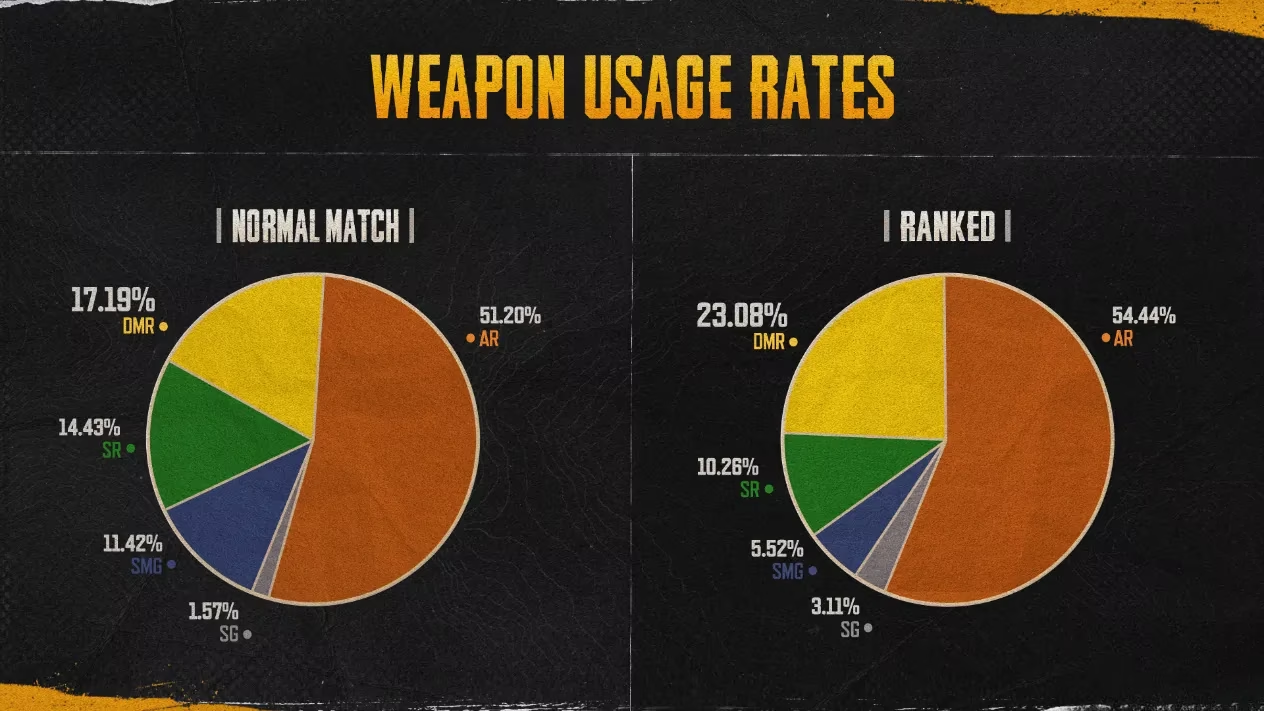
At first glance, weapon usage numbers can look almost healthy. ARs still make up more than half of all weapon usage, but the trend is what matters. Since PUBG's early days, AR usage has dropped from 68.0% to 51.2%, while DMR usage has climbed from 14.8% to 17.2%. In Ranked matches, DMR usage reaches 23.1%. That shift may seem modest on a spreadsheet, but in actual matches it produced a meta that many players could recognize by sound alone: crack, heal, peek, repeat.
| Weapon Category | Old Usage | Current Usage |
|---|---|---|
| ARs | 68.0% | 51.2% |
| DMRs | 14.8% | 17.2% |
| DMRs in Ranked | - | 23.1% |
A Story Told by Damage, Not Just Kills
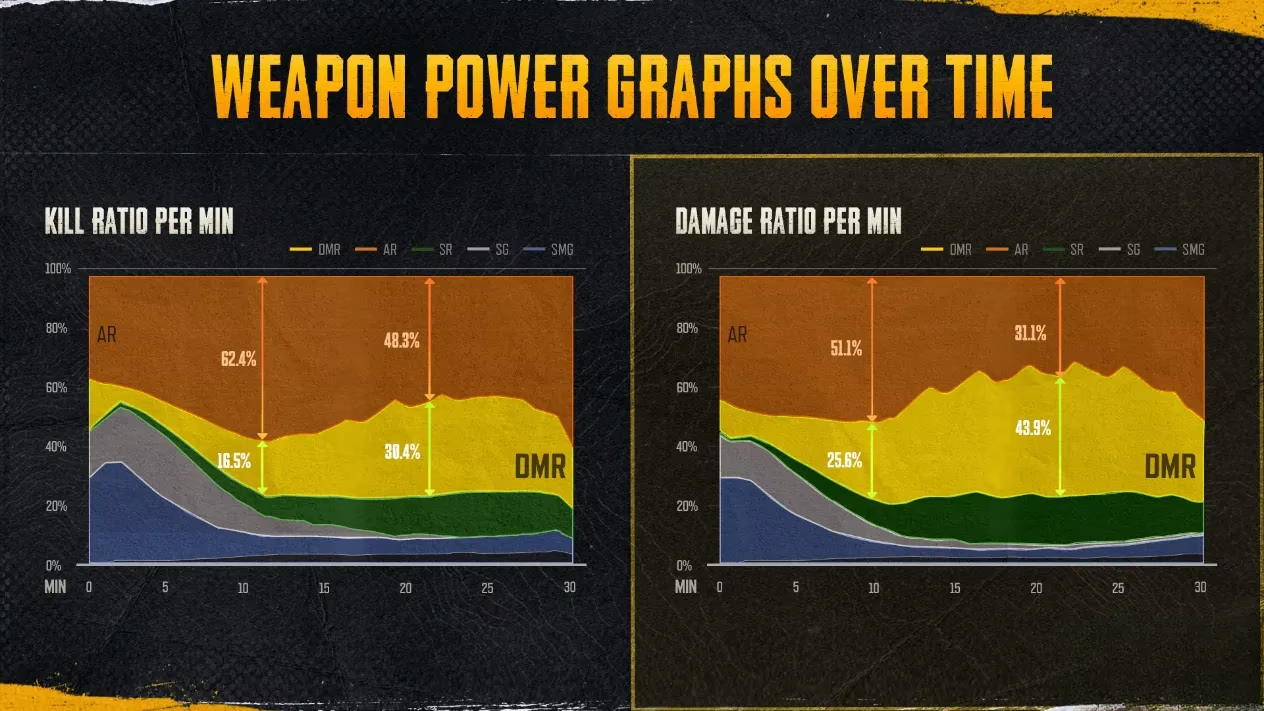
Damage data tells a sharper story. If kill counts are a photograph, damage contribution is a time-lapse of how a match actually unfolds. ARs dominate the early game, but starting in Phase 2, DMR damage rises rapidly. DMRs produce a much higher damage ratio than kill ratio, and after Phase 1 they lead in damage output for most of a match. This matters because PUBG is not only about finishing kills; it is about controlling space, pressuring rotations, and denying safe movement before the Blue Zone tightens.
Why DMR Dominance Made Matches Feel Stuck
The issue was not that DMRs existed or even that they were strong. The issue was that they were becoming a default reflex—like a well-worn footpath across a meadow that eventually becomes the only path anyone uses. Long-range standoffs became sticky. Teams would trade damage, fall back to heal, revive behind cover, and repeat from the same rocks or windows. Less experienced players found themselves with fewer escape routes against precise DMR shooters, making comeback moments rarer and the skill gap wider. In that environment, dynamic play—vehicle pushes, smoke entries, bold flanks—felt like throwing a bucket of water into a river. The current simply carried everything back to the same long-range duel.
What Actually Changes in Update 37.1
Those changes first entered testing through Gunplay Labs in Update 36.1, giving the community an early look before the live rollout. The full Update 37.1 version includes several key adjustments:
-
🛠️ DMR damage reduced by about 12%.
-
🛠️ Most DMRs can no longer two-tap an enemy, meaning the classic head + body combo is no longer enough to secure a kill.
-
🛠️ Compared to ARs, DMRs still deal similar or higher damage.
-
🛠️ RPM reduced by about 45%, except for the Dragunov and Mk14.
-
🛠️ Muzzle velocity and damage drop-off were left untouched to preserve the DMR identity as a mid-to-long-range specialist.
Perhaps the most telling detail is what was not changed. The team did not simply increase recoil as a blunt instrument. This rebalance is less about punishing DMR users and more about reducing overwhelming dominance. Think of it as trimming the sails of a boat that had started to monopolize the wind rather than sinking the boat entirely.
A Healthier Orbit for Gunplay
Looking ahead, the goal is not to erase long-range combat. PUBG's randomized Blue Zone and wide terrain make long-range fights an inherent part of the experience. Instead, the rebalance aims to widen the available strategic palette. When DMR dominance fades, finishing off downed enemies becomes more difficult, and survival chances increase. Close-quarters combat, vehicle rotations, smoke pushes, and flanking plays have more room to matter.
Players who adapted to the old rhythm may feel some whiplash, but this adjustment is best understood as part of an ongoing cycle. With bi-monthly gunplay balance updates continuing into 2026, the developers have framed this as a live process rather than a final verdict. The hope is that weapon choice becomes less like a mandatory checkbox and more like a genuine decision shaped by terrain, circle position, and team play.
Every weapon type should feel like a viable choice. That does not mean every gunfight will suddenly be balanced in a sterile way. It means the stale, repetitive loop of long-range DMR standoffs can give way to a broader set of engagements. In the long run, that shift may do more for PUBG's longevity than any single stat change.