How Urzikstan’s Gulag Brought Back the Classic 1v1 Thrill (And Then Some)
Urzikstan's Gulag masterfully revives Warzone with a pure 1v1 duel and Night Ops, becoming the benchmark for battle royale revives.
I’ve been dropping into Call of Duty: Warzone since the days of Verdansk, and I’ve seen the Gulag evolve—sometimes brilliantly, sometimes disastrously. Back in late 2023, when Raven Software unveiled the Urzikstan map for Modern Warfare 3’s first season, I was skeptical. Another large-scale industrial wasteland? Sure, fine. But the real headline for me was the complete overhaul of the Gulag. Fast-forward to 2026, and I can confidently say that Urzikstan’s Gulag not only rescued the post-death duel experience but also set a template that future battle royales are still trying to capture.
If you’ve ever clutched a Gulag win at 1 HP with no plates, you know the rush. It’s what separates Warzone from every other BR—that second-chance gamble where a single gunfight determines whether you’re spectating your squad or repurchasing them. The team-centric design of Warzone has always rewarded coordination, but the Gulag is the only place where you’re truly alone, facing your own mistakes. And after the divisive Warzone 2 era, the Gulag needed a rebirth.
The 2v2 Experiment: A Noble Flop
When Call of Duty: Warzone 2 launched, the developers tried to shake things up. The Gulag became a 2v2 arena with a lumbering Jailer mini-boss, asymmetrical layouts, and loot caches scattered about. In theory, it was meant to reduce RNG and encourage teamwork even in death. In practice? It was chaotic and deeply frustrating. You’d get paired with a random teammate who had no mic, or worse, one who sprinted straight into the Jailer’s shotgun. Fans loathed it. The soul of the Gulag—that pure, 1-on-1 bragging-rights duel—had been buried under overdesigned gimmicks.
I remember screaming at my monitor more times than I’d like to admit. A Gulag shouldn’t require PhD-level coordination. It should be instinct. Quick. Decisive. Raven Software clearly listened, because Urzikstan’s Gulag ripped out everything extraneous and went back to the DNA of the mode.
Back to Basics—With a Twist
Urzikstan’s Gulag is a glorious return to 1v1. No partner, no AI juggernaut. Just you, one opponent, and a symmetrical three-lane arena that could easily be mistaken for a classic Call of Duty map like Shipment if it were sliced in half. You’ve got your left lane, your right lane, and a cluttered mid. Every gunfight feels balanced, predictable in the best way. Peeker’s advantage? Manageable. Corner camping? Flushable with a stun. This is the Gulag I fell in love with back in Verdansk, only tighter and more polished.
But here’s where it gets spicy. Raven didn’t just copy-paste the old formula. They injected two little wrinkles that turned a nostalgic return into something genuinely fresh, even in 2026.
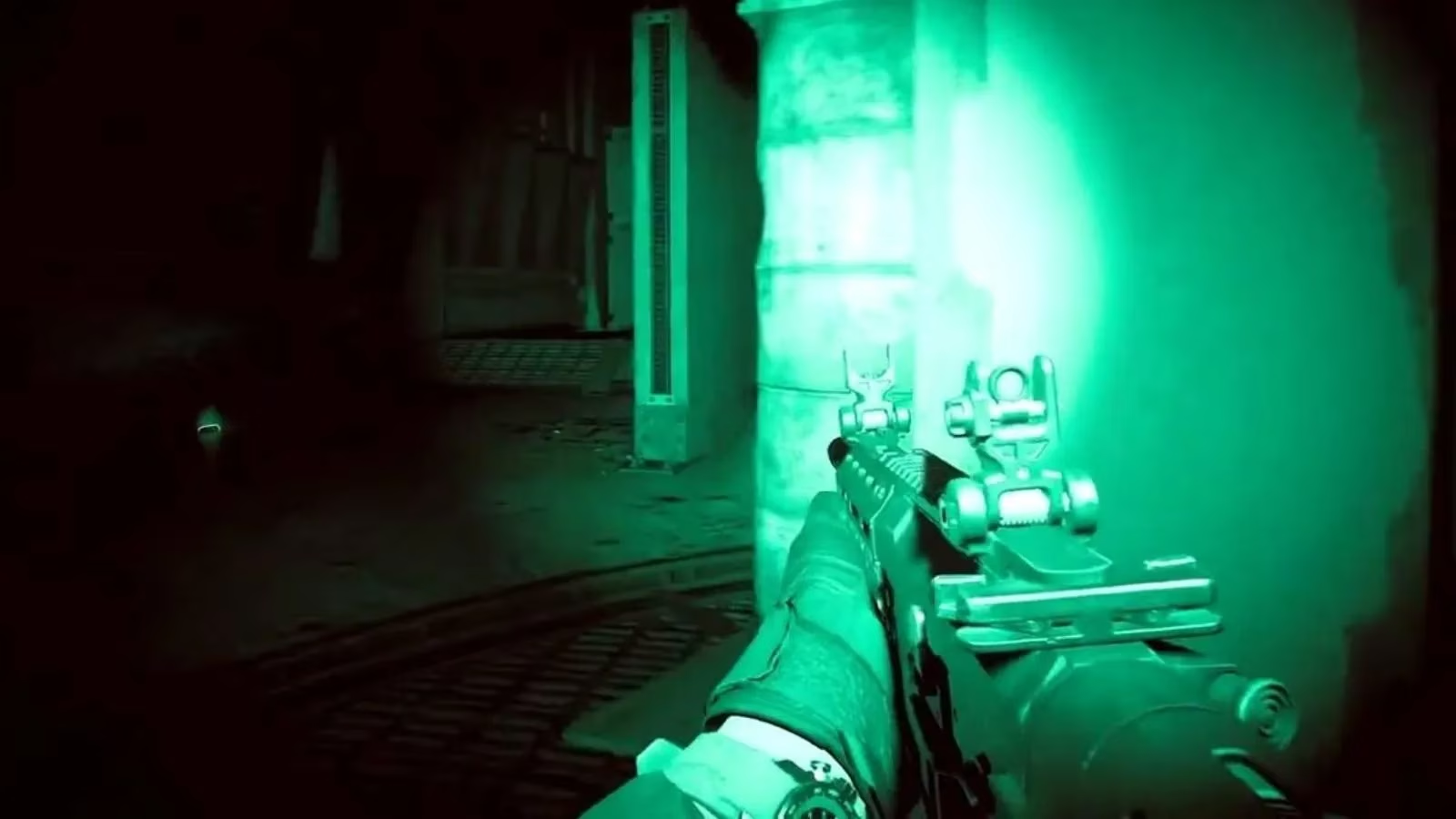
The first is Night Ops mode. Occasionally, when you load into the Gulag, every light flickers out. You’re plunged into pitch-black darkness. The only way to see is through night-vision goggles that flip down automatically. The greenish hue is disorienting, sound becomes hyper-critical, and suddenly a routine duel turns into a tense predator-versus-prey stealth minigame. I’ve won fights by listening to an opponent’s footsteps crunching on debris, then pre-firing blindly down the right lane. It’s a tiny RNG addition, but it injects such a jolt of adrenaline that even my squadmates who aren’t in the Gulag get hyped watching it.
The second innovation is the escape rope. Once the overtime countdown hits zero, a thick knotted rope drops from the ceiling right into the center of the arena. Both players are now on an equal timer, but instead of a domination-style flag capture, you have to physically ascend that rope to win and redeploy. The catch? You’re completely vulnerable during the climb—no weapon, no plates, just a frantic scramble upward. It forces an insane risk-reward calculus: do you push the rope early and hope your opponent misses? Or do you try to eliminate them first and then escape with seconds to spare? I’ve seen players fake-out by starting the climb, then dropping back down to surprise a greedy chaser. It’s brilliant, and it makes every overtime finish a nail-biter.
Why This Design Sticks Around in 2026
Fast-forward three years, and these elements have aged like fine wine. The 1v1 return re-established the Gulag as the golden standard of post-death mini-games. Other BRs tried imitating—remember the Apex Legends Redemption Room? Yeah, nobody talks about it. The night-vision mechanic has been ported into limited-time modes even outside Warzone, and the rope escape has become a defining clip-farming moment for streamers.
What makes Urzikstan’s Gulag so enduring is that it respects the player’s time and ego. You lose a fight in the main map, you wait a couple of minutes, then you get a fair, intense 1v1 where your individual skill speaks volumes. No outside interference, no teammate dragging you down. Win? You’re hailed as the hero who’s coming back with a pistol and a dream. Lose? You still feel like you had a fighting chance—and that’s leagues better than dying to a Jailer’s aimbot.
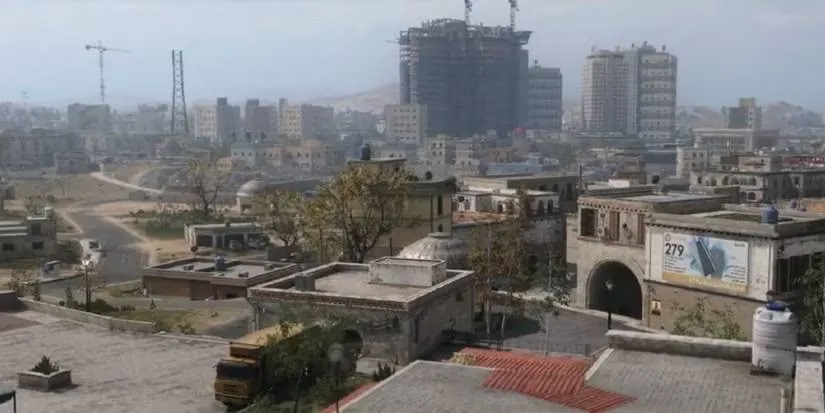
The map itself, Urzikstan, eventually became a beloved playground with its derelict industrial zones and nostalgic map nods like Favela and Derail, but it’s the Gulag I keep fondly returning to in my head. It proved that sometimes the best innovation is subtraction, paired with small, fearless additions that amplify the core thrill without drowning it. If you’re a new player jumping into Warzone in 2026, you’ll step into that concrete arena and instantly understand why we veterans still cheer when the lights go out and the rope drops. It’s a masterclass in competitive game design, wrapped in a 60-second adrenaline spike.