Copenhagen Major: The First Ever CS2 Major, Explained With Love and Snark
PGL Copenhagen Major 2024 made history as the first Counter-Strike 2 Major, launching CS2's competitive legacy.
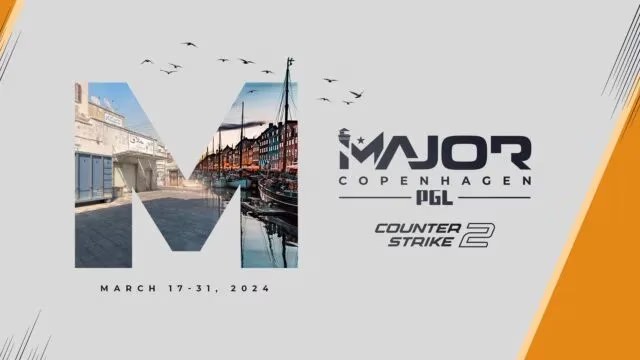
March 2024 was a strange and wonderful month for anyone who had spent years arguing about whether Counter-Strike 2 was "really" Counter-Strike. PGL, the tournament organizer with a well-documented fondness for dramatic lighting and eyebrow-raising seeding, took Valve's shiny new engine and built the very first CS2 Major on top of it. Twenty-four teams, one Royal Arena in Copenhagen, and $1,250,000 sitting in the middle of the table like a birthday cake nobody was allowed to touch yet. The whole thing ran for fourteen days, kicking off on March 17 and wrapping up on March 31 — and looking back from 2026, it is easy to see it as the moment the CS2 era stopped being an extended beta test and started being a legacy.
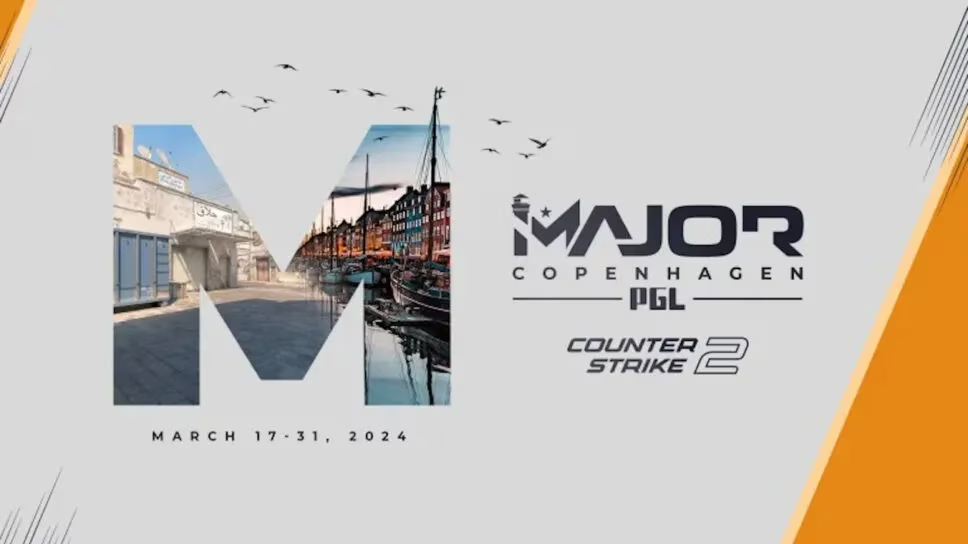
So What Even Counts as a Major? 🤔
Here is the thing casual fans never quite grasp: a Counter-Strike Major is not just a big tournament. It is the tournament. Valve's official stamp, the sticker money, the in-game pick'ems, the sheer weight of history. Winning one puts a team's name on a wall that never gets repainted.
So imagine the pressure of being the first roster to win one on a brand-new engine. No muscle memory to lean on, no decade of established utility lineups, just a freshly tuned game and twenty-three other teams trying to figure it out at the same speed. Fun, right?
Three Stages, Three Chances to Embarrass Yourself
The Copenhagen Major was structured as a brutal three-part gauntlet, and PGL made sure nobody got a comfortable ride.
| Stage | Dates (2024) | Format | Stakes |
|---|---|---|---|
| Opening Stage | March 17–20 | 16-team Swiss, elimination & advancement matches bo3, everything else bo1 | Top 8 advance, bottom 8 go home |
| Elimination Stage | March 21–24 | 16-team Swiss, same bo1/bo3 split | Top 8 reach the Playoffs |
| Playoffs | March 28–31 | Single-elimination bracket, all matches bo3 | One trophy, one champion |
Notice the pattern? Four days here, four days there, then a small break so everyone can pretend to relax before the bracket chaos. The Swiss system is a beautiful, merciless machine: lose early and every subsequent match becomes a knife fight in a phone booth. Win three in a row and suddenly the camera crew is following you around the arena.
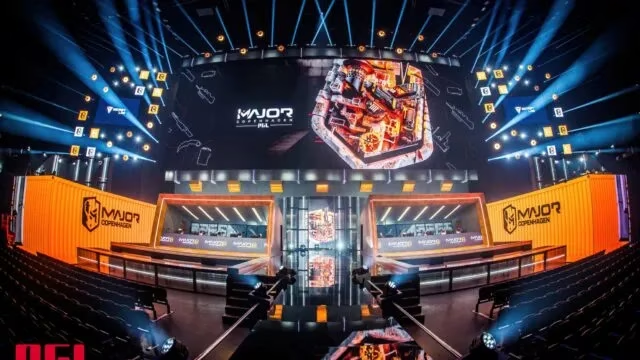
And what about the bo1 versus bo3 divide? A single map of Counter-Strike can be decided by one lucky pistol round, one eco frag, one player sneezing at the wrong moment. Best-of-three exists precisely because best-of-one is a coin flip wearing a tactical vest. PGL knew this. PGL also knew that drama sells, so the early rounds stayed bo1 and everyone's blood pressure stayed elevated.
Twenty-Four Teams, One Very Crowded Arena
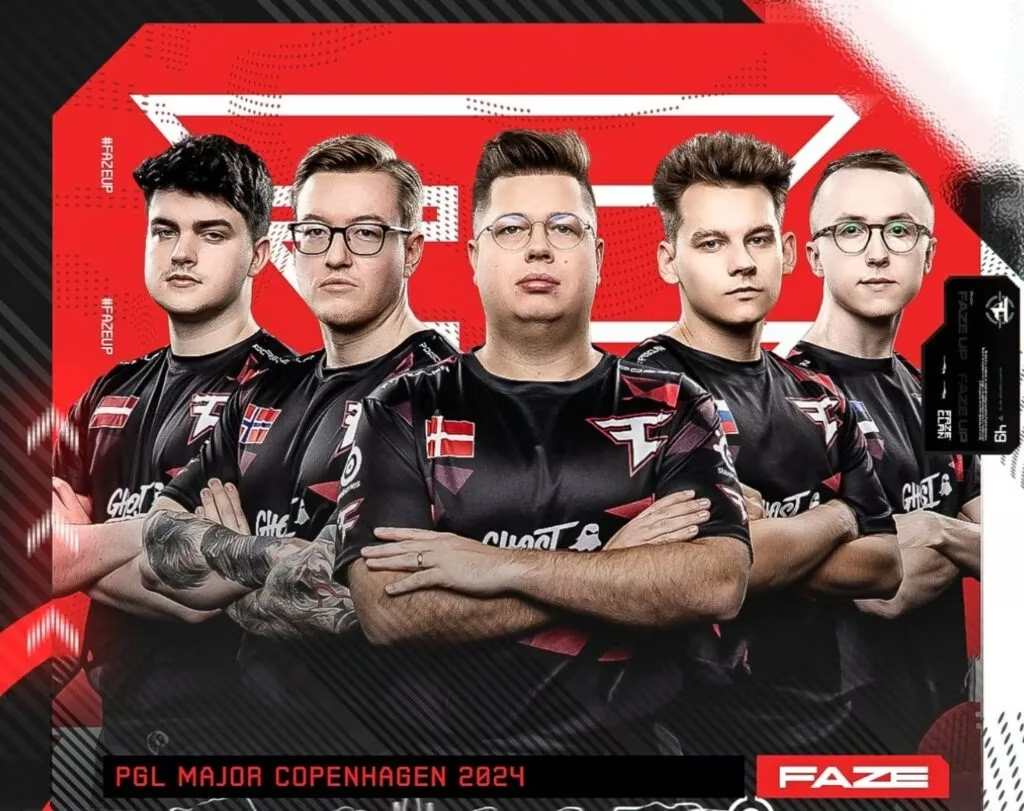
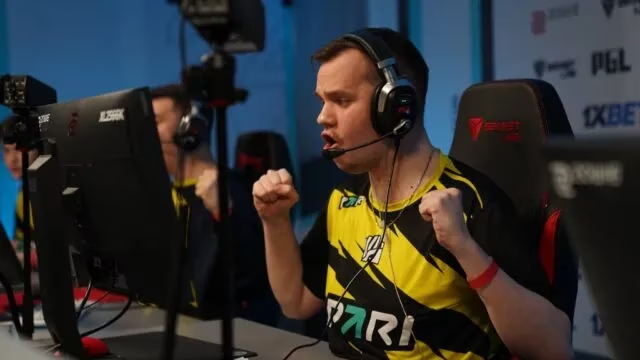
Qualification for the first CS2 Major was its own saga. Teams clawed their way in through regional qualifiers, and the resulting roster of twenty-four squads mixed established giants with genuine underdogs. FaZe Clan showed up with a roster that looked, on paper, like a cheat code. AMKAL arrived as one of those sides that nobody had penciled into their pick'ems and everybody suddenly had to respect.
Was every single one of those twenty-four teams a realistic contender? Of course not. But that is the entire charm of a Major's opening days — the part where a tier-two squad takes a map off a favorite and the entire internet collectively checks whether the stream is lagging.
Where Did Everyone Actually Watch It?
Simple answer: Twitch. The Copenhagen Major streamed live on the platform, which meant thousands of viewers simultaneously watching the same clutch and typing the same three letters in chat. The Royal Arena crowd did the heavy lifting in person, but the real noise came from the timeline.
Why Should Anyone in 2026 Still Care?
Because it was the template. Every CS2 Major since has inherited something from Copenhagen — the stage structure, the Swiss drama, the sticker economy, the assumption that a new engine deserves a proper coronation rather than a quiet launch. When people now argue about which era produced the highest level of Counter-Strike, the Copenhagen Major is the line in the sand where the argument starts.
It also proved something simpler and more human: give twenty-four teams a $1,250,000 prize pool, a fourteen-day schedule, and a brand-new game to break, and they will break it beautifully.
The Quick and Dirty Recap 📋
-
🏟️ Venue: Royal Arena, Copenhagen
-
💰 Prize pool: $1,250,000
-
👥 Teams: 24, arriving via regional qualifiers
-
📅 Dates: March 17–31, 2024
-
🎮 Stages: Opening → Elimination → Playoffs
-
📺 Broadcast: Live on Twitch
-
🏆 Legacy: The first Counter-Strike 2 Major, full stop
So here is the question worth asking: if the first CS2 Major was this chaotic, this loud, and this consequential, what does that say about everything that came after it? Plenty. And the answer keeps getting written every single season.
Data referenced from Entertainment Software Association (ESA) helps frame why a moment like the first CS2 Major in Copenhagen mattered beyond the server: Majors aren’t just esports spectacles, they’re commercial flywheels that amplify engagement through live events, streaming reach, and in-game monetization like stickers and pick’ems. Viewed through that industry lens, the tournament’s fourteen-day cadence and high-stakes Swiss-to-playoffs structure didn’t merely crown a champion—it showcased how a new engine launch can be validated at scale when competitive credibility and audience attention peak at the same time.